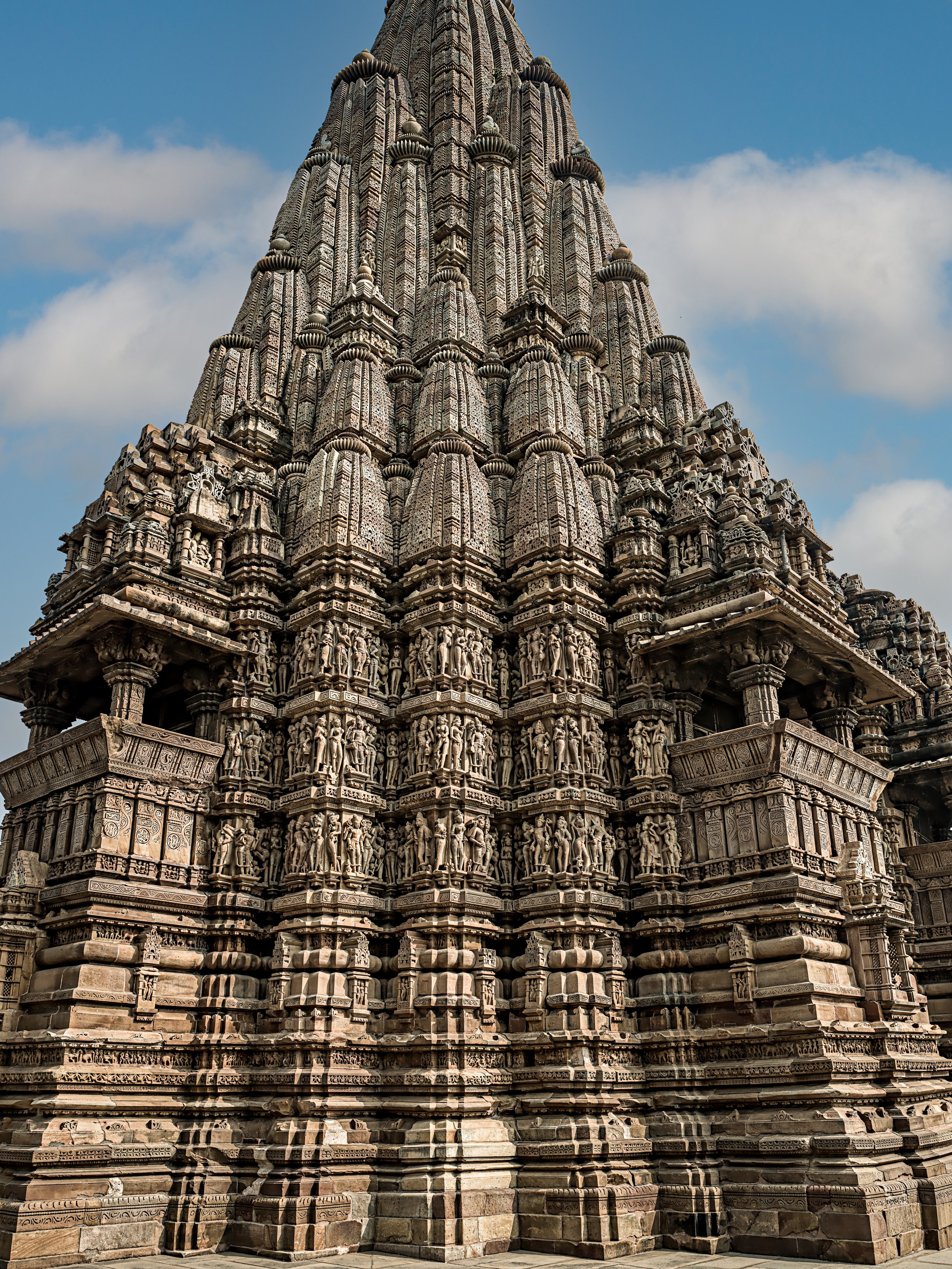
khajuraho temple
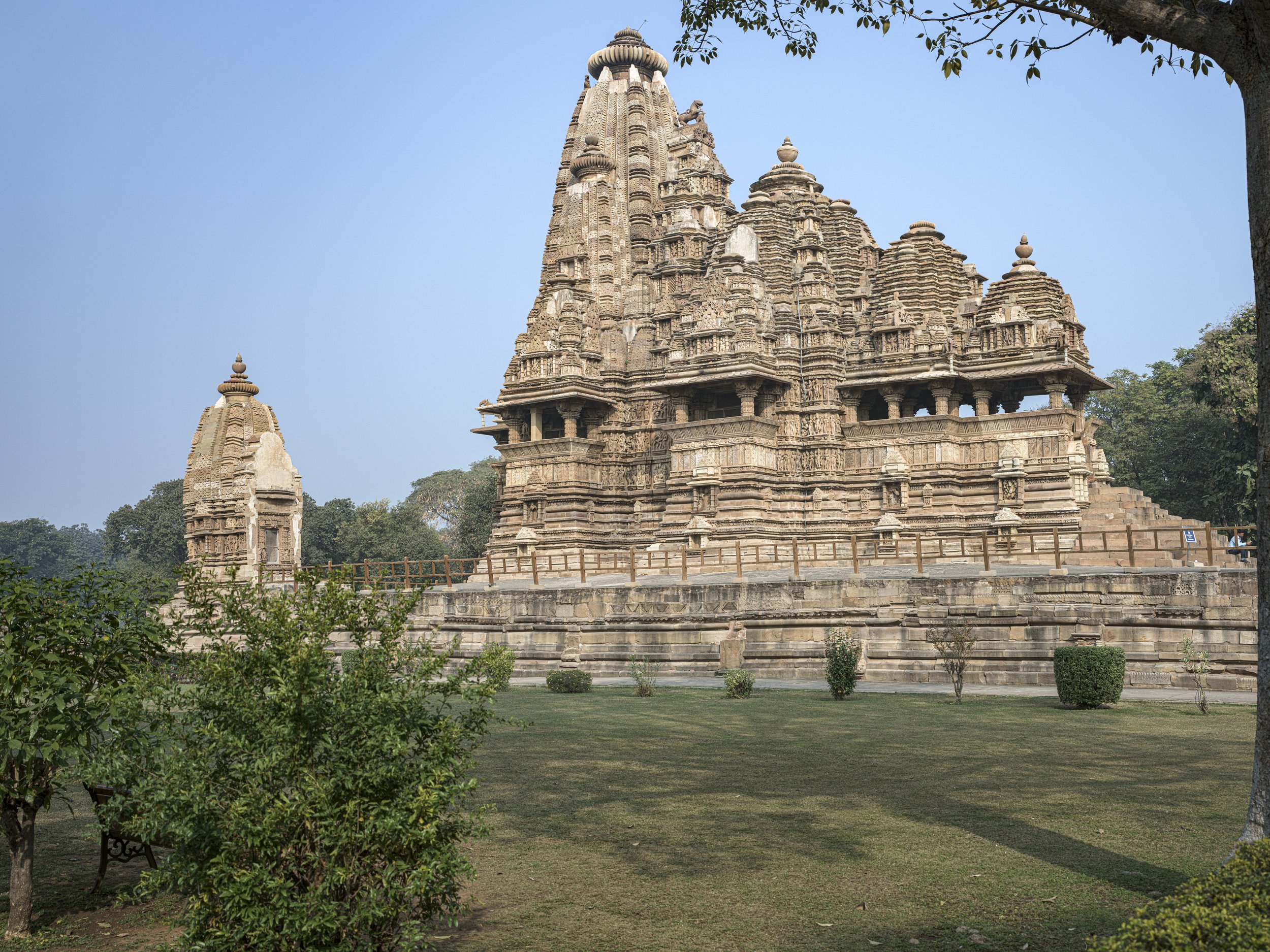
khajuraho temple

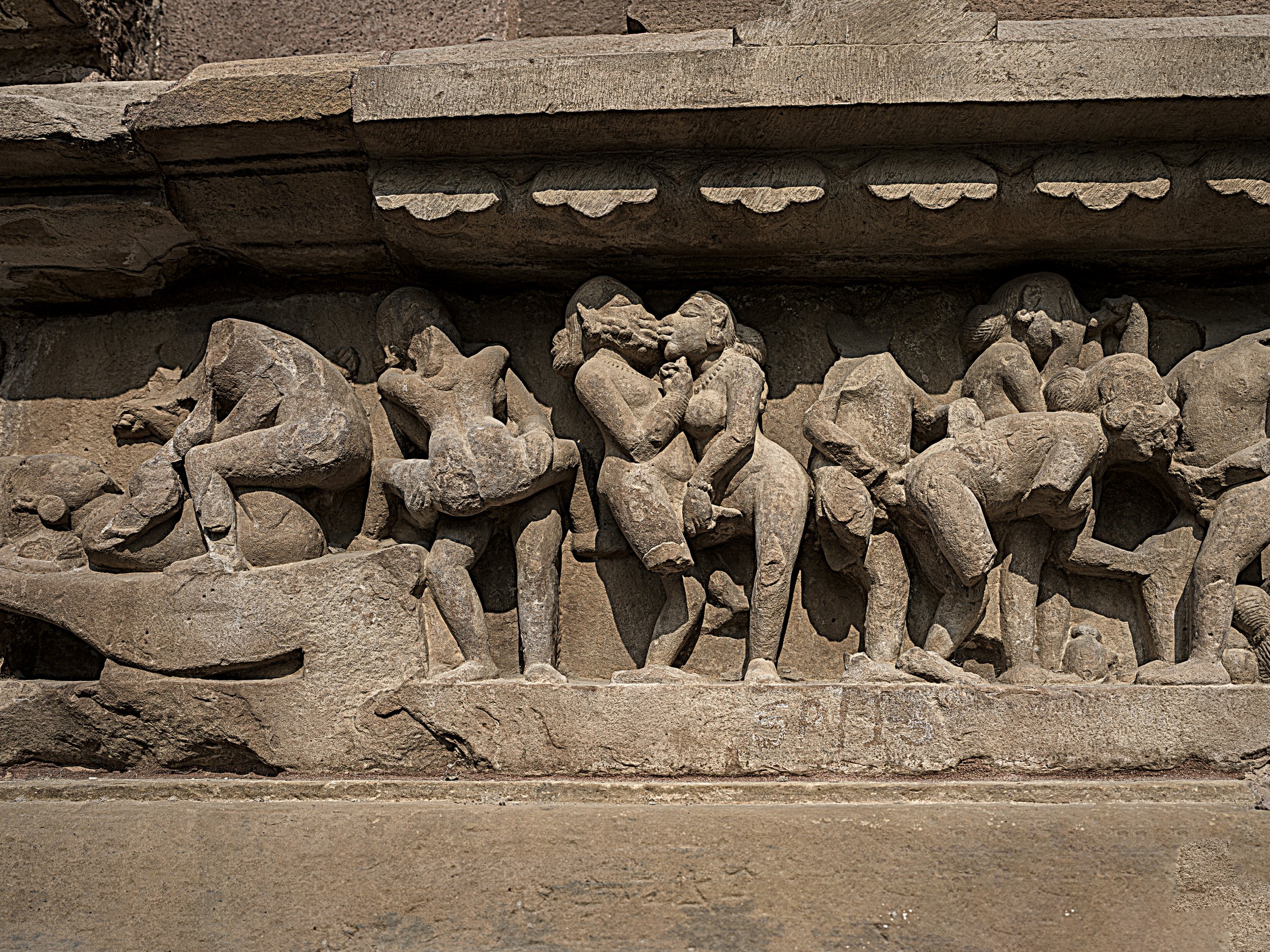
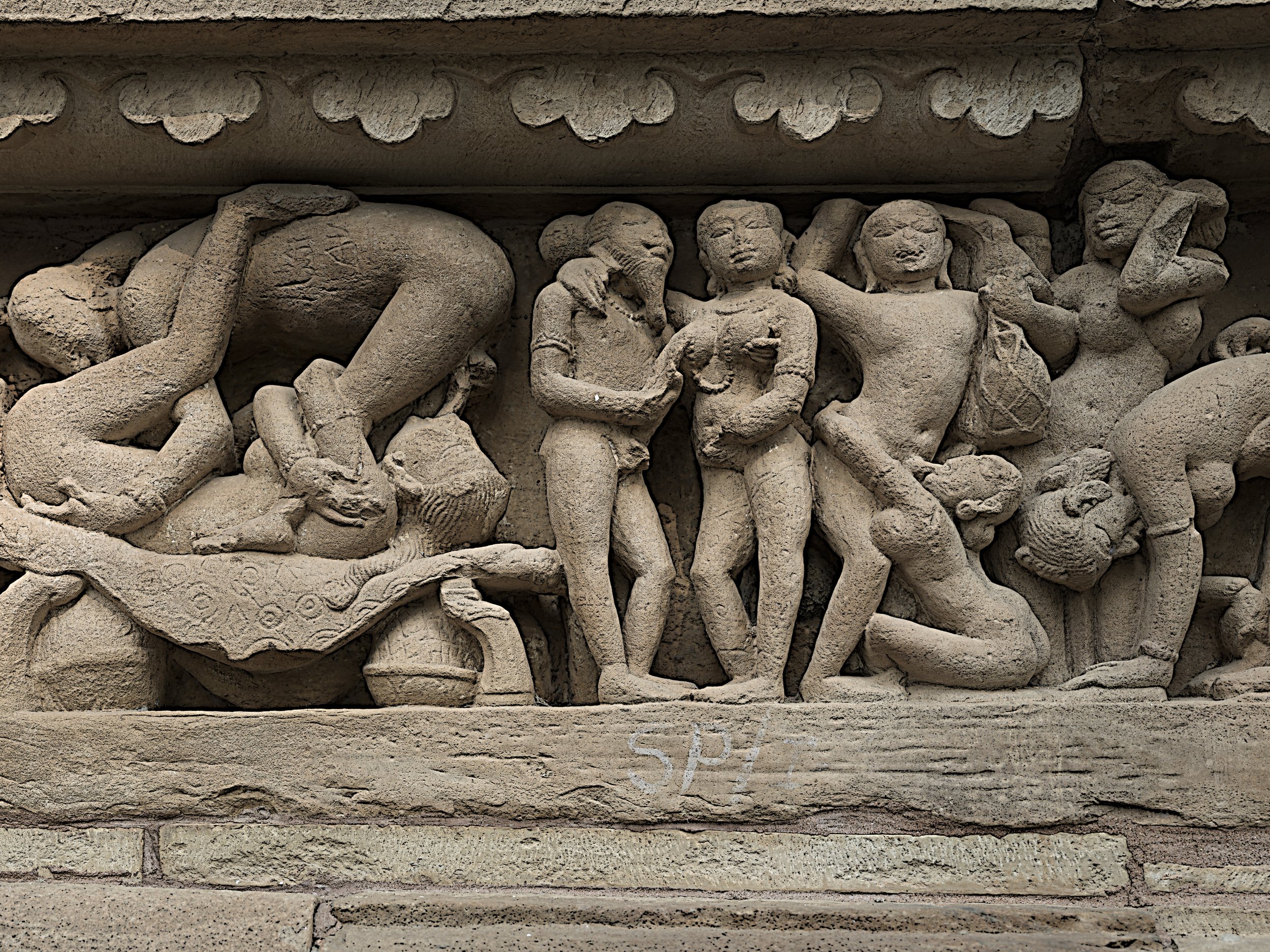
the temples at khajuraho consist of temples for the faiths of hindu and , at a separate site, digambara jains. they are sited in madhya pradesh. and are grouped in 3 geographical diviosions, western , eastern and southern. only 25 out of theoriginal 85 have survived. they are magnificent and certainly worth going out of your way for a visit
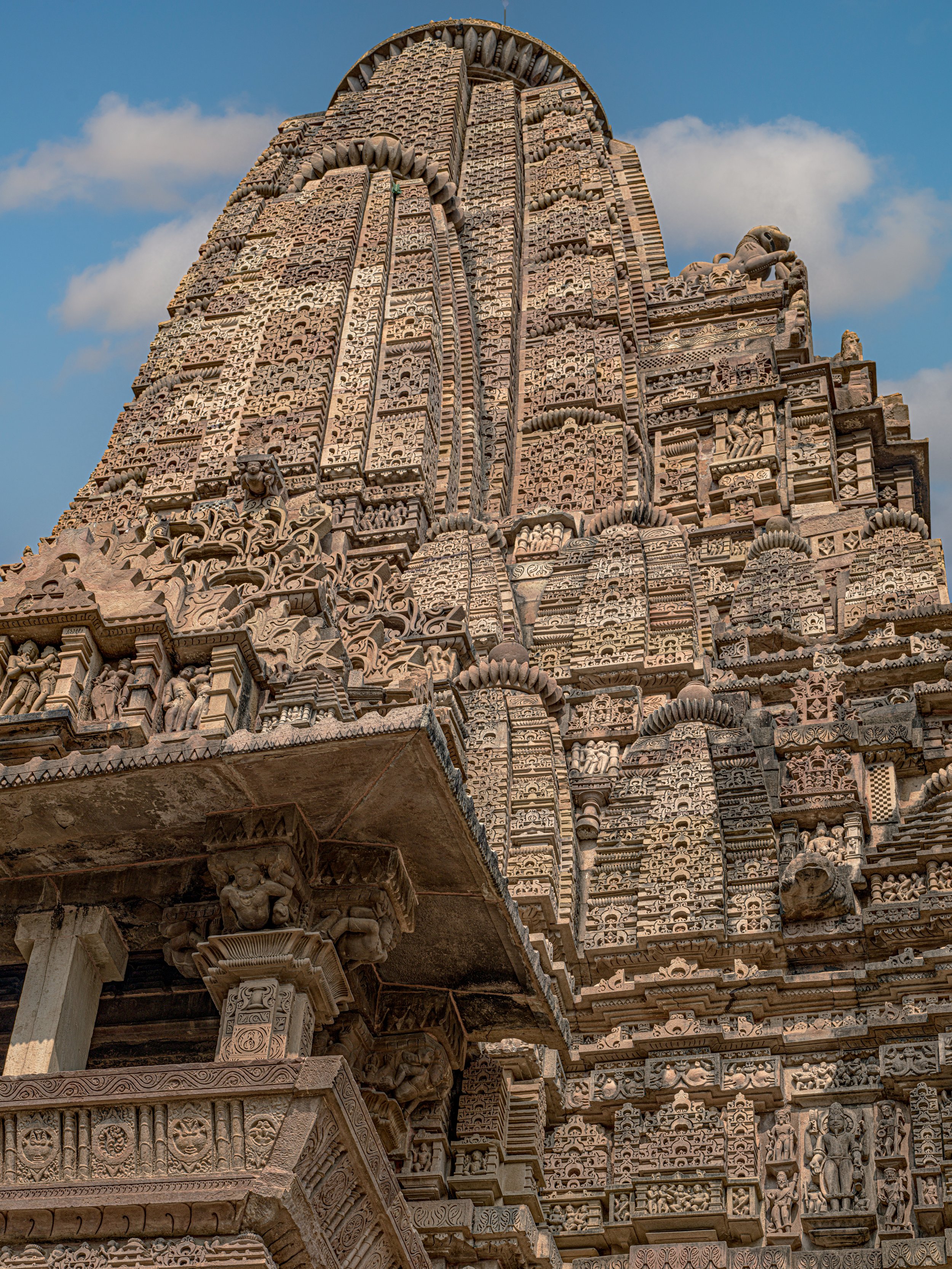
khajuraho temple..2
khajuraho temple..2

the temples were built between 885 ad and 1000 ad during the chandela dynasty but left to neglect after the kindom was seized by the delhi sultanate. they were rediscovered and brought to a global audience in the 1830s.
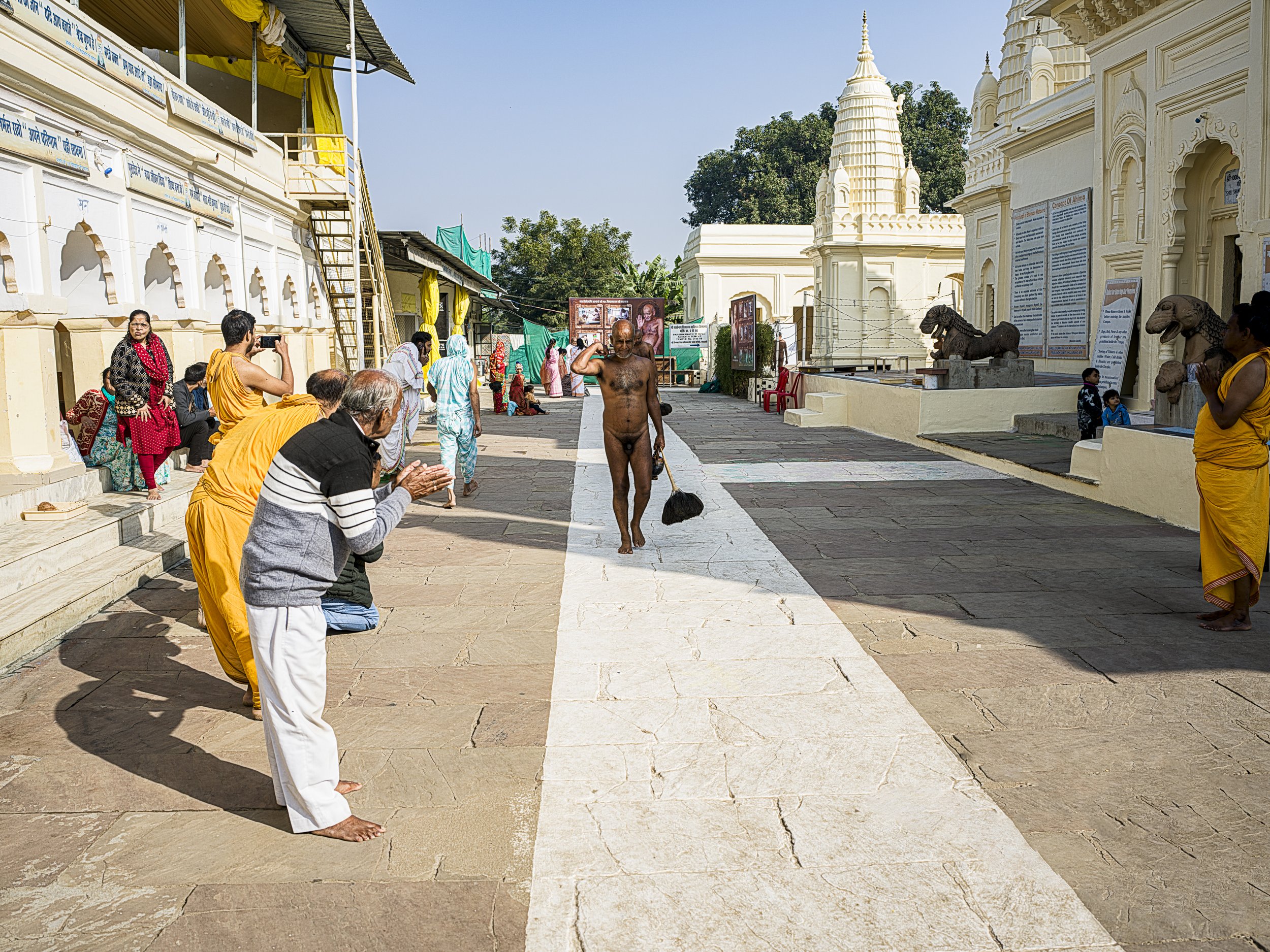
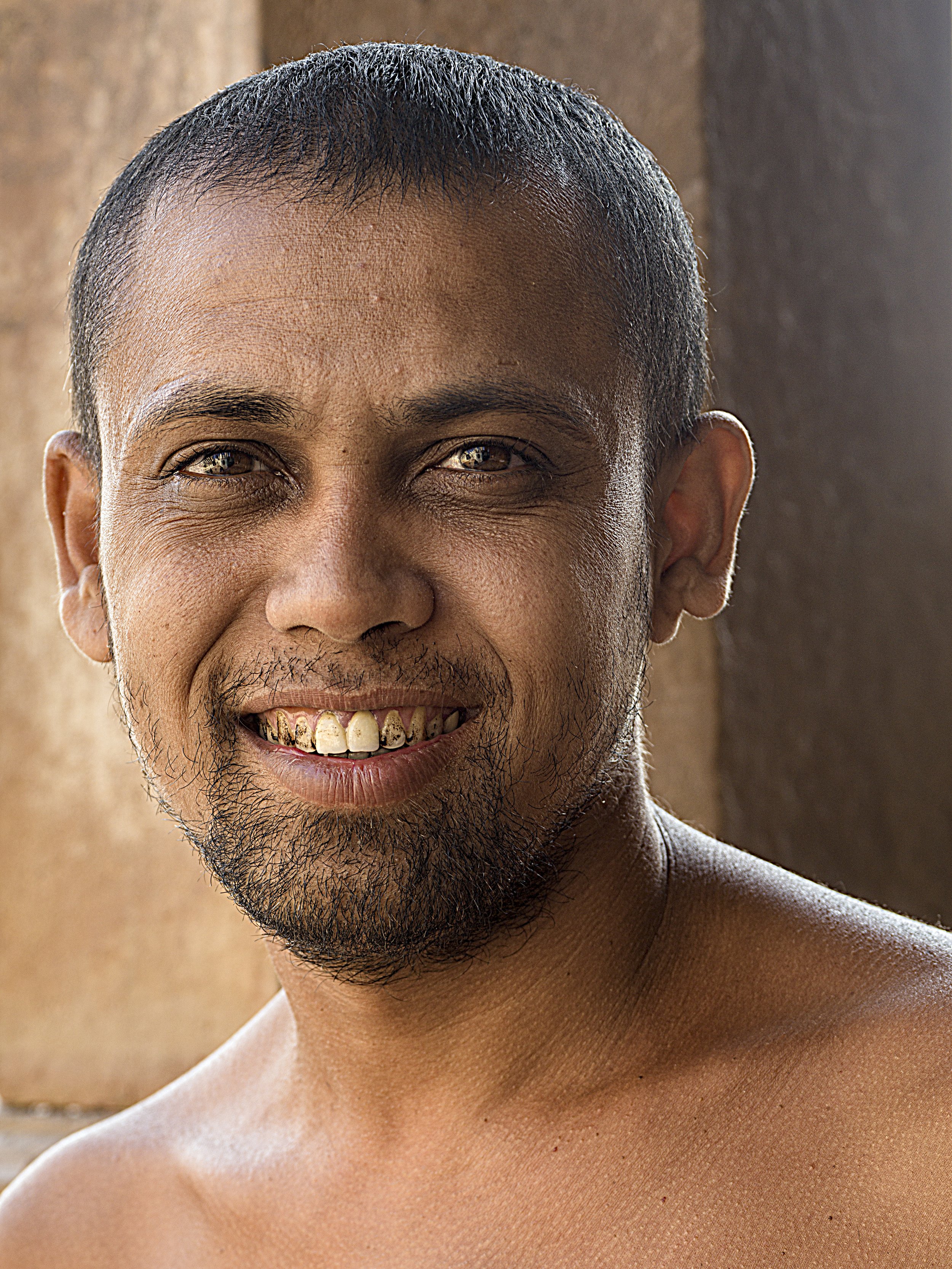
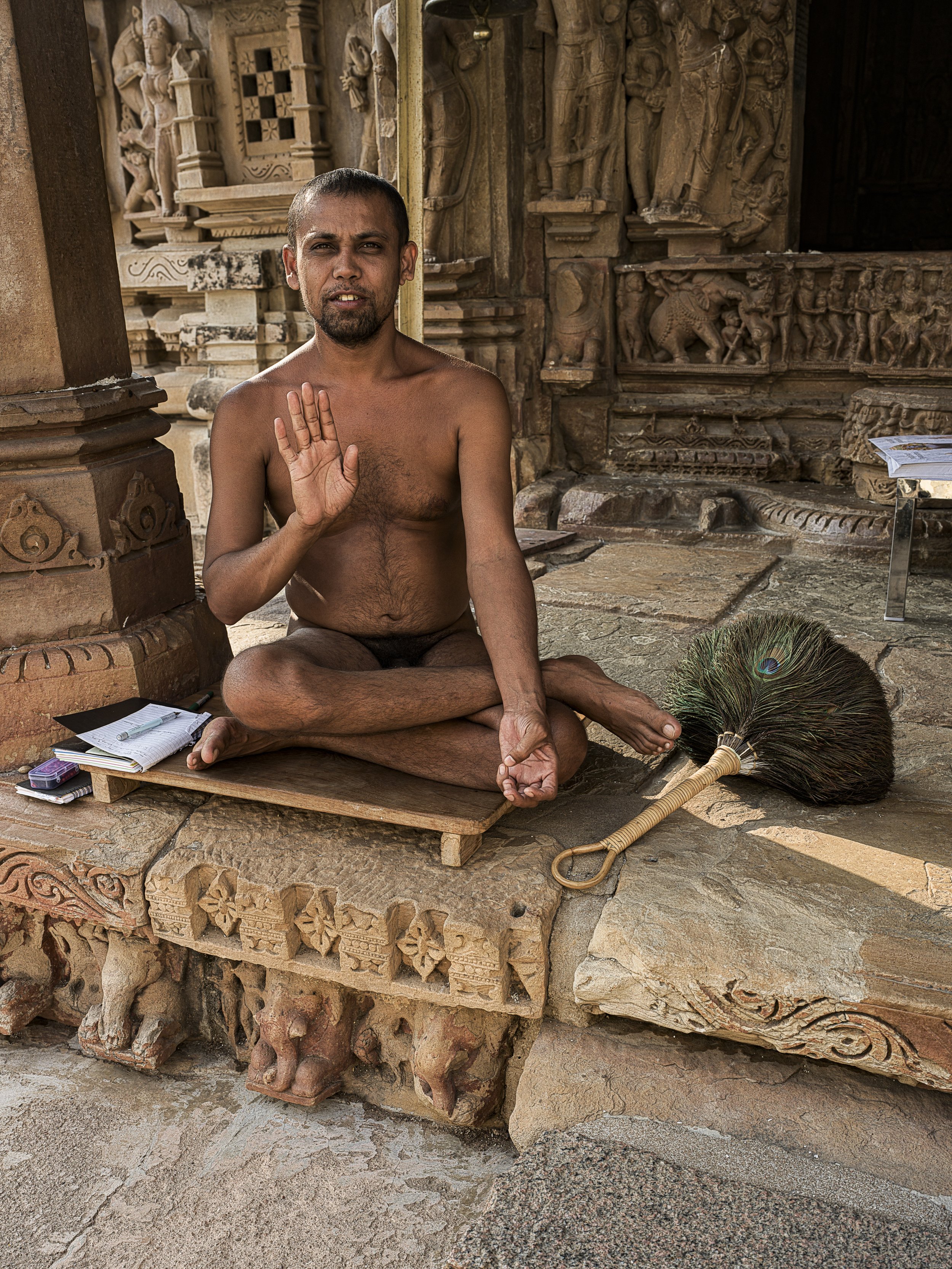
jain monks of the digambara sect

they wear no clothes and dont bathe.

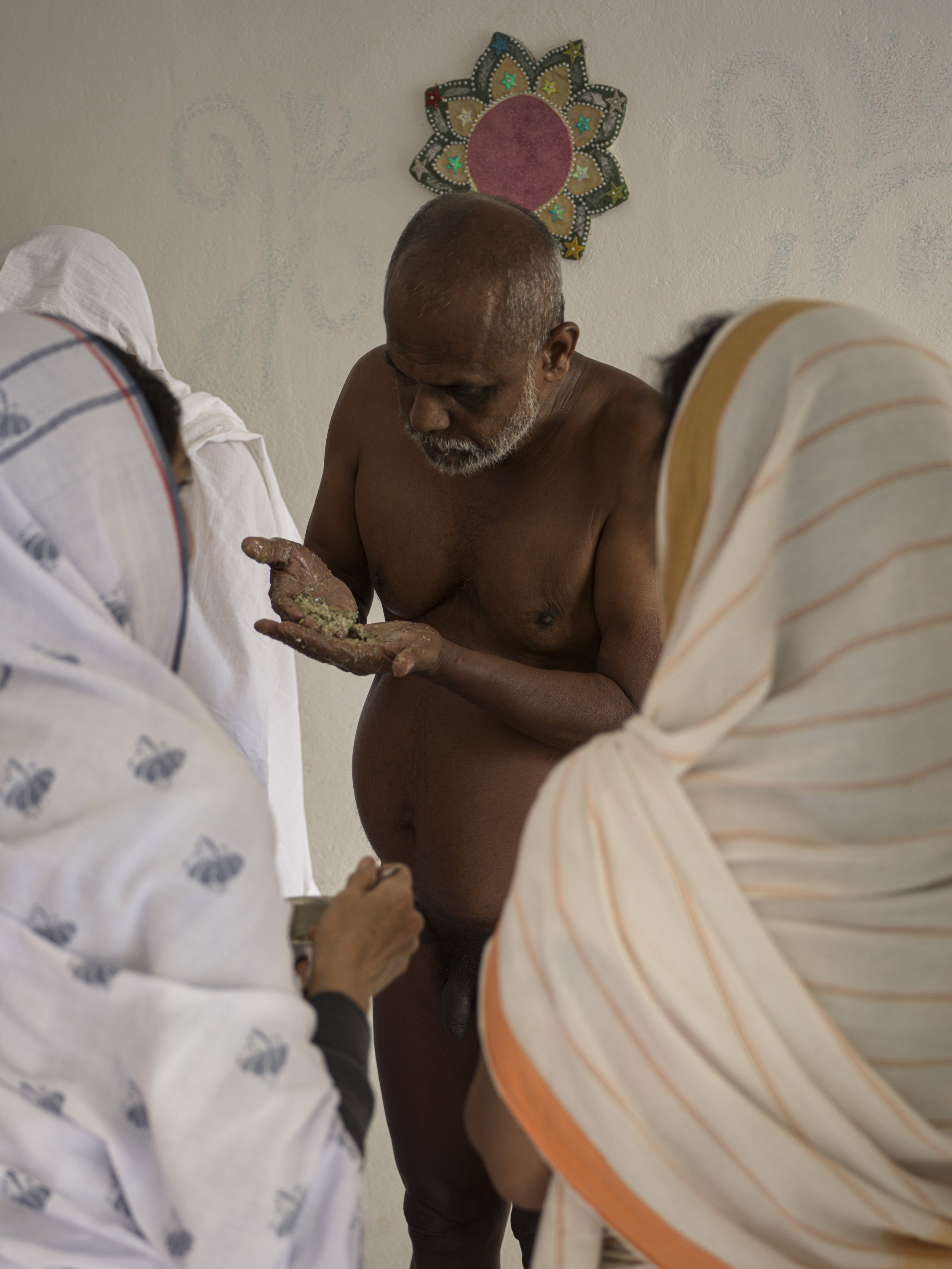
they drink water from a gourd and carry peacock feather dusters which they use to clear their path in order to avoid stepping on any insect.

they beg for food and eat only once per day
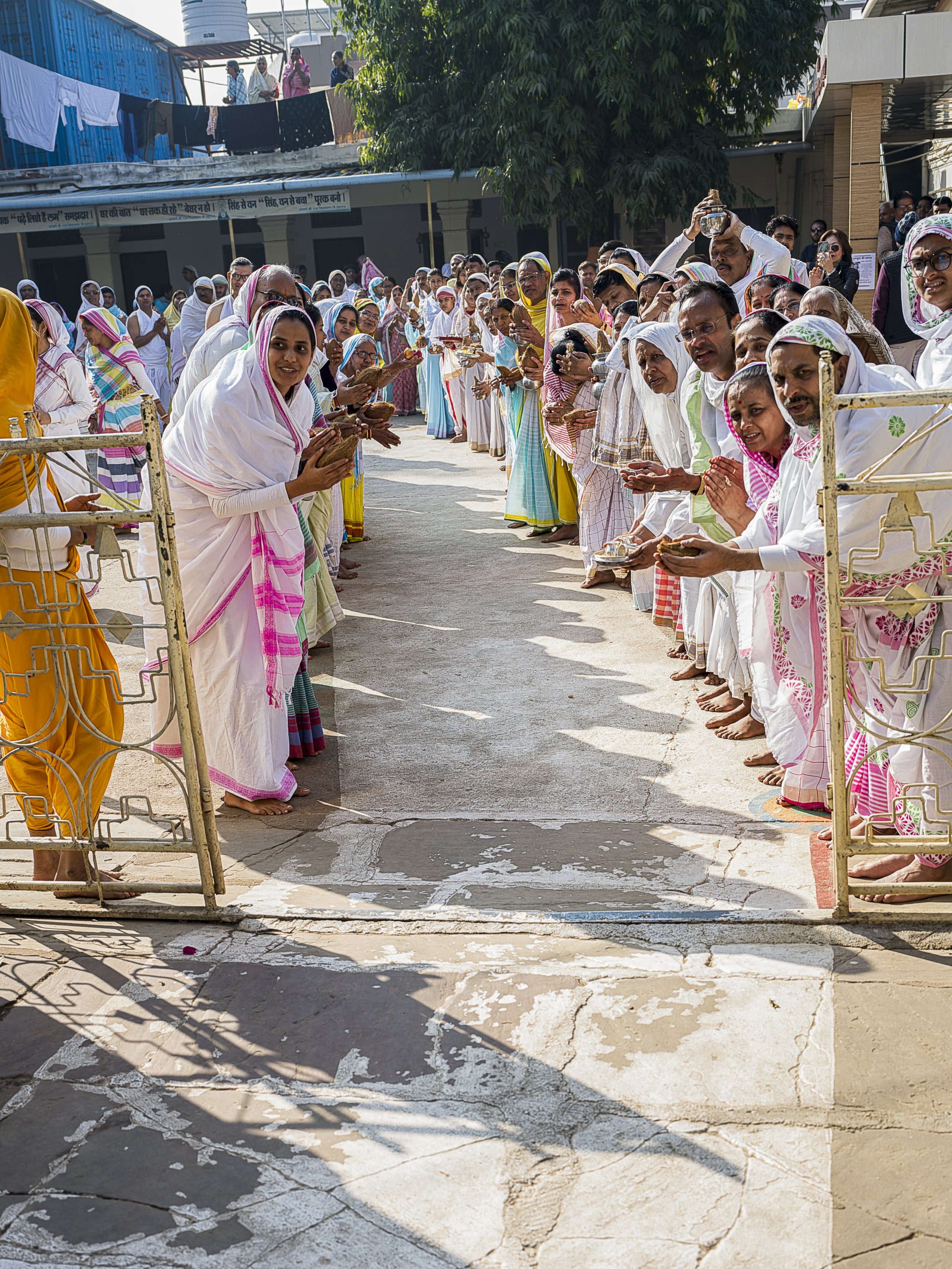
people line up for the honour of feeding the monks

photographs of the digambara jains taken at the jain temples in khajuraho
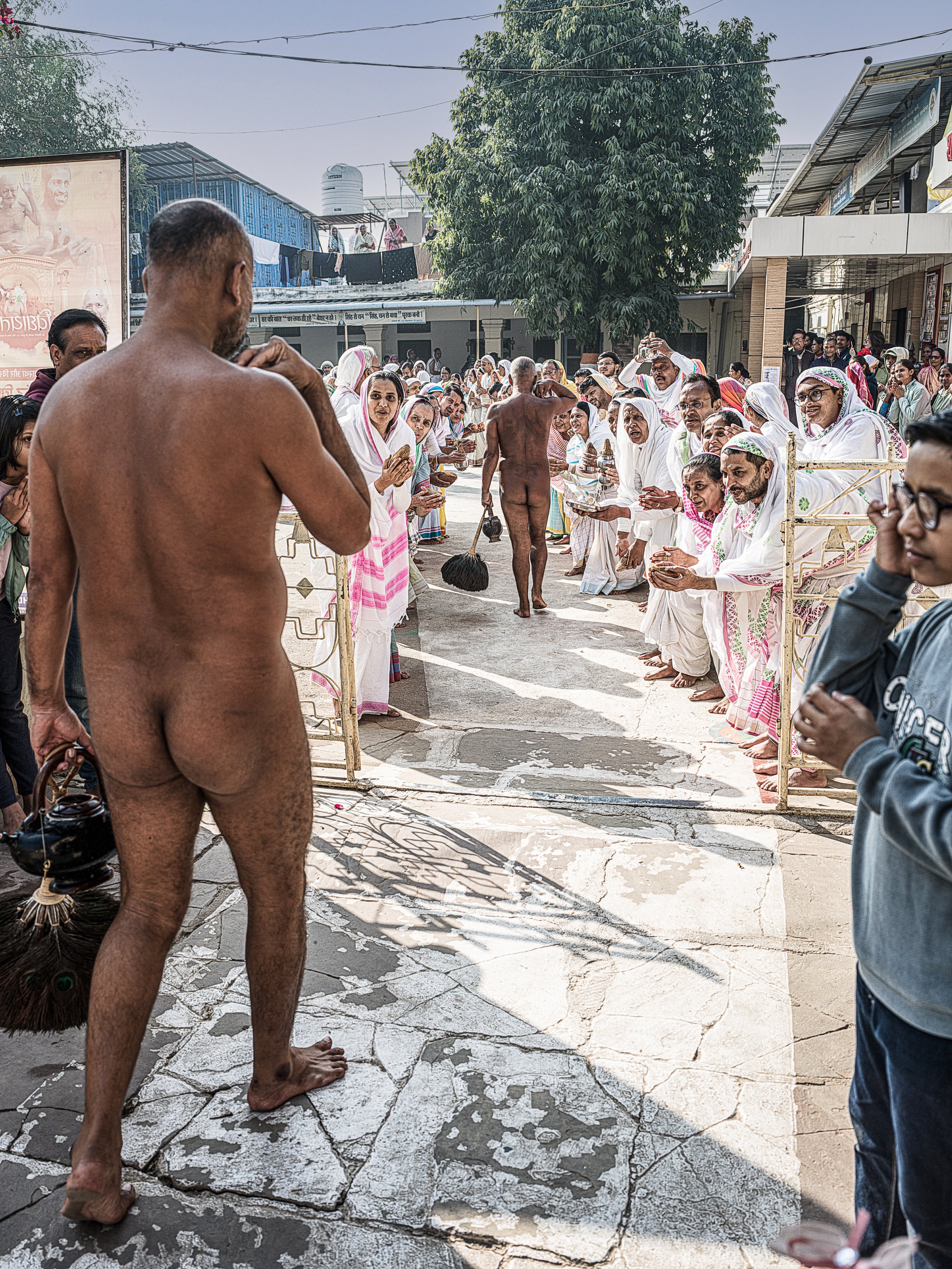
digambara jains about to select a household to have lunch
the number two jain monk approaches the people who wish to feed him

the thumb and four fingers of the right hand rest on the monks shoulder, this is called the ahara mudra. if the monk loses this position on the way to the host house holder he is not supposed to eat that day. in this way the monk does not rest assured about the pleasure of obtaining food.

the monks peacock feather brush and gourd water bottle are clearly visible.

where will the monks eat?

people get very excited in the competition to persuade the monks to eat at their house.

the jain diet is based on non violence

digambara jains eat in a standing position from the hollow of their hands

nirgranth guru
nirgranth guru

he is on instagram.

the monks will stay at a place for a few months. the head jain monk can ask the monks to move to another jain site which he will nominate.

digambara monk with followers

the monks will spend some of the day sitting with followers at sights spread out amongst the jain temples

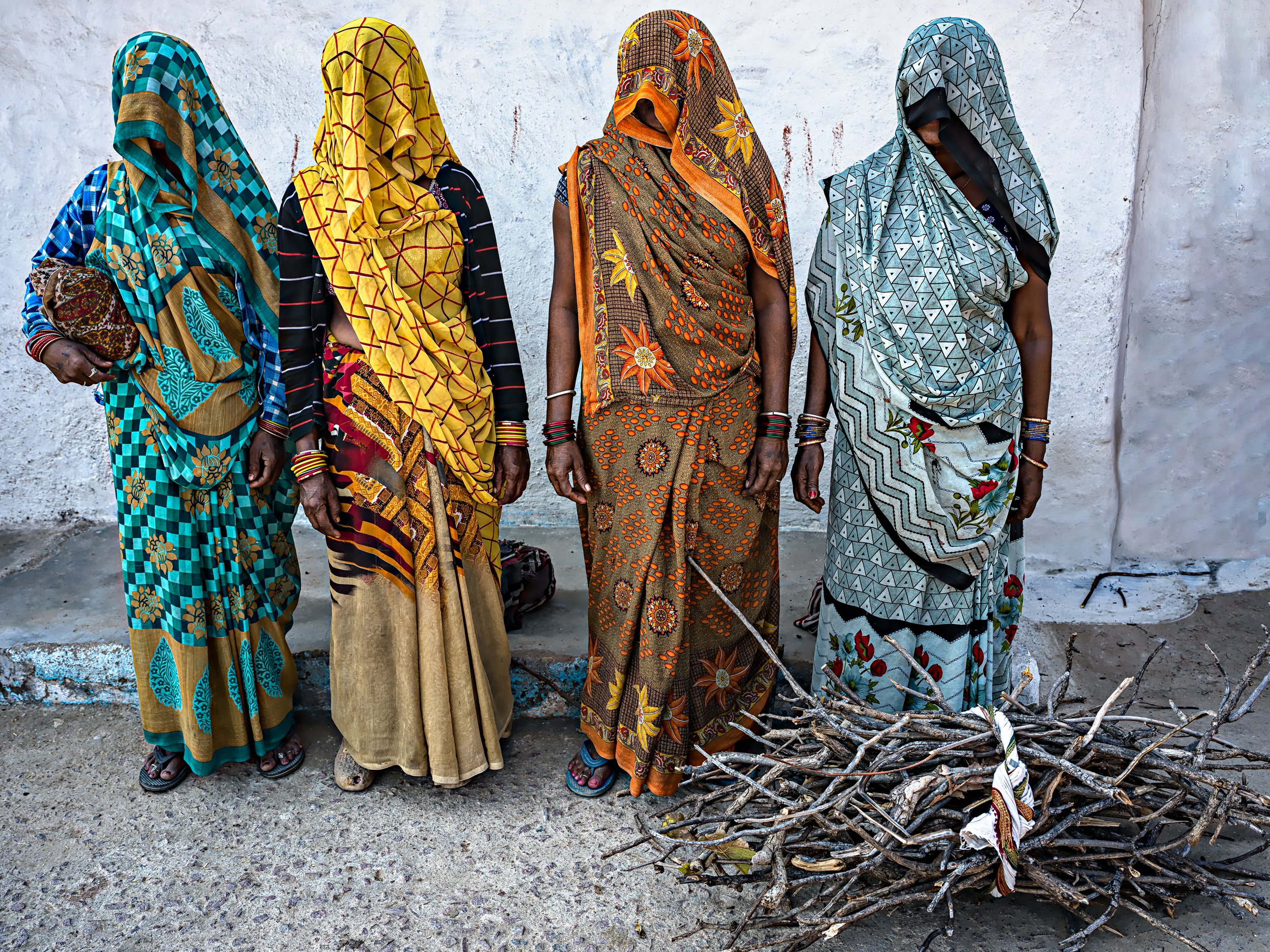
colour not only found in rajasthan

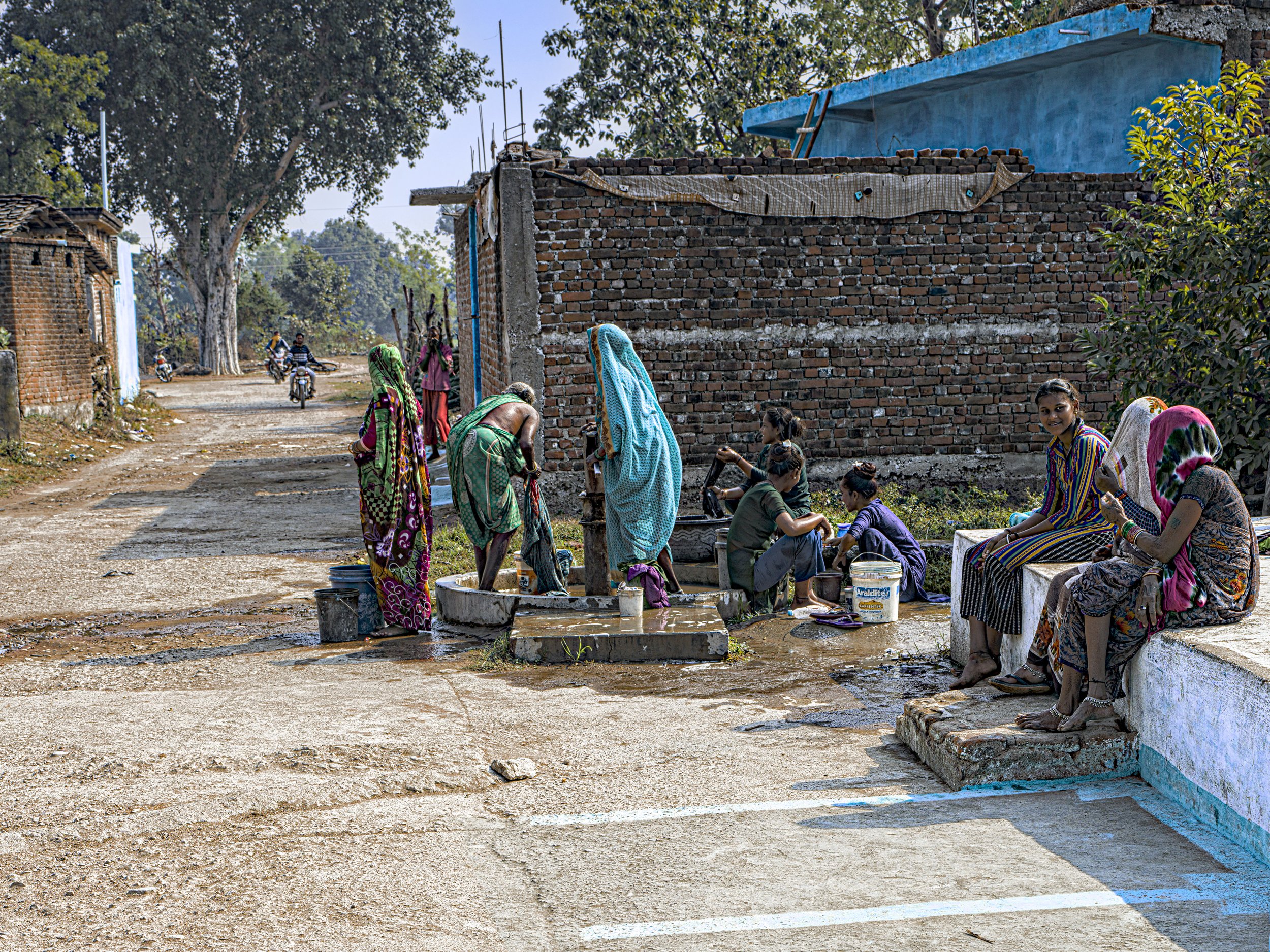
village near the palace of rajgarh , madhya pradesh

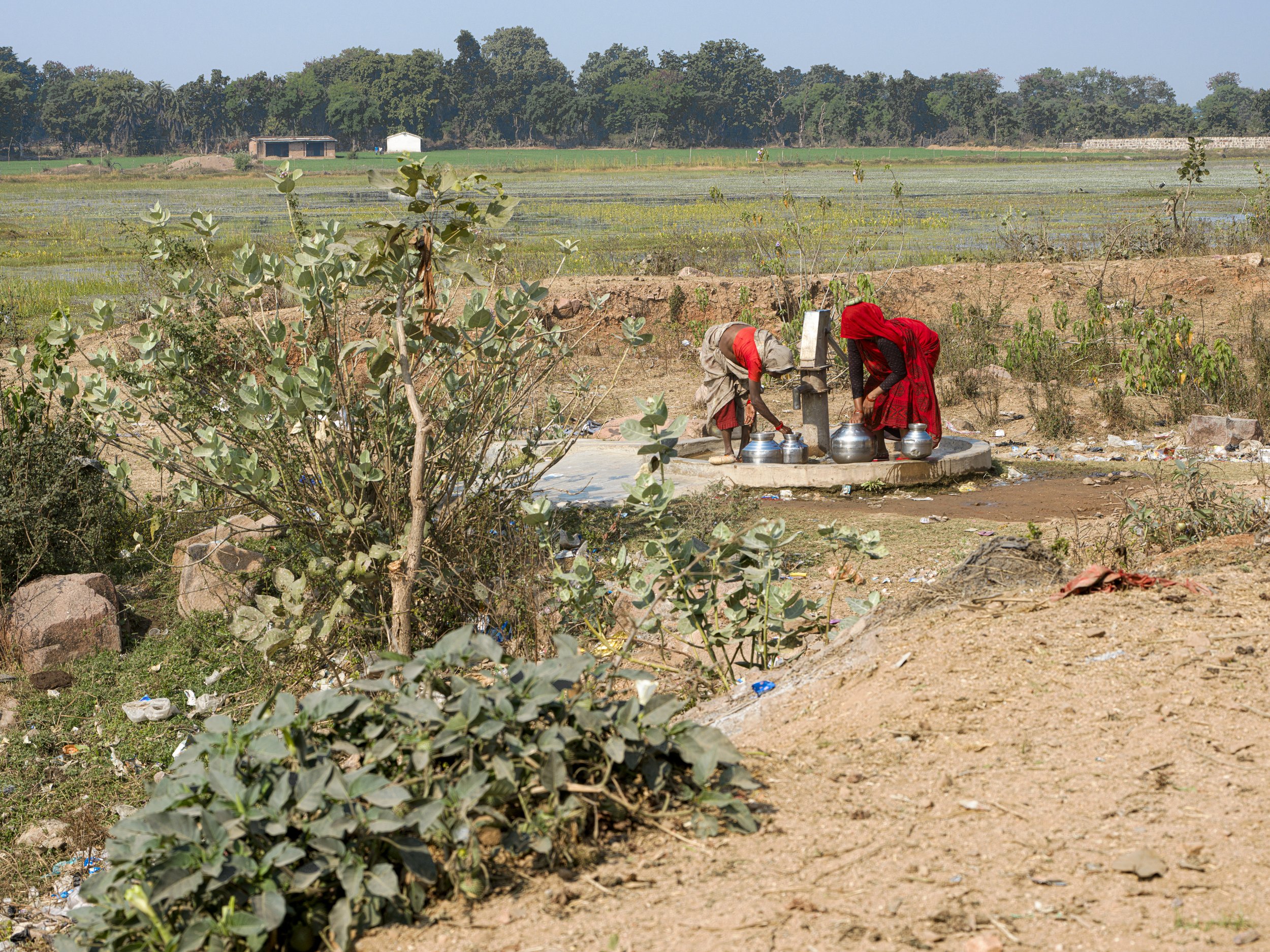
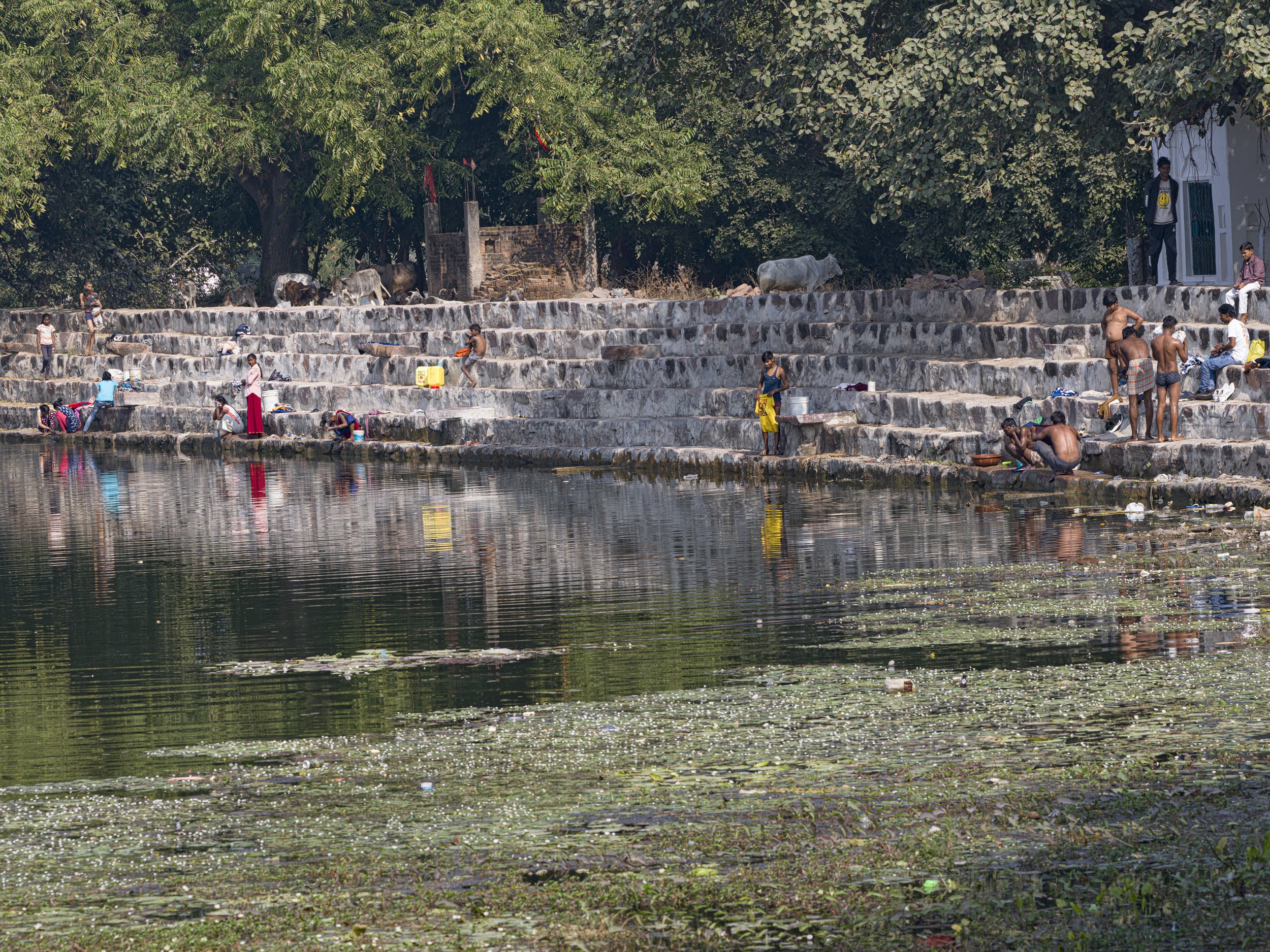
typical scene in rural india

…… centred around the village water pump

the village is a few kilometres from the palace of rajgarh

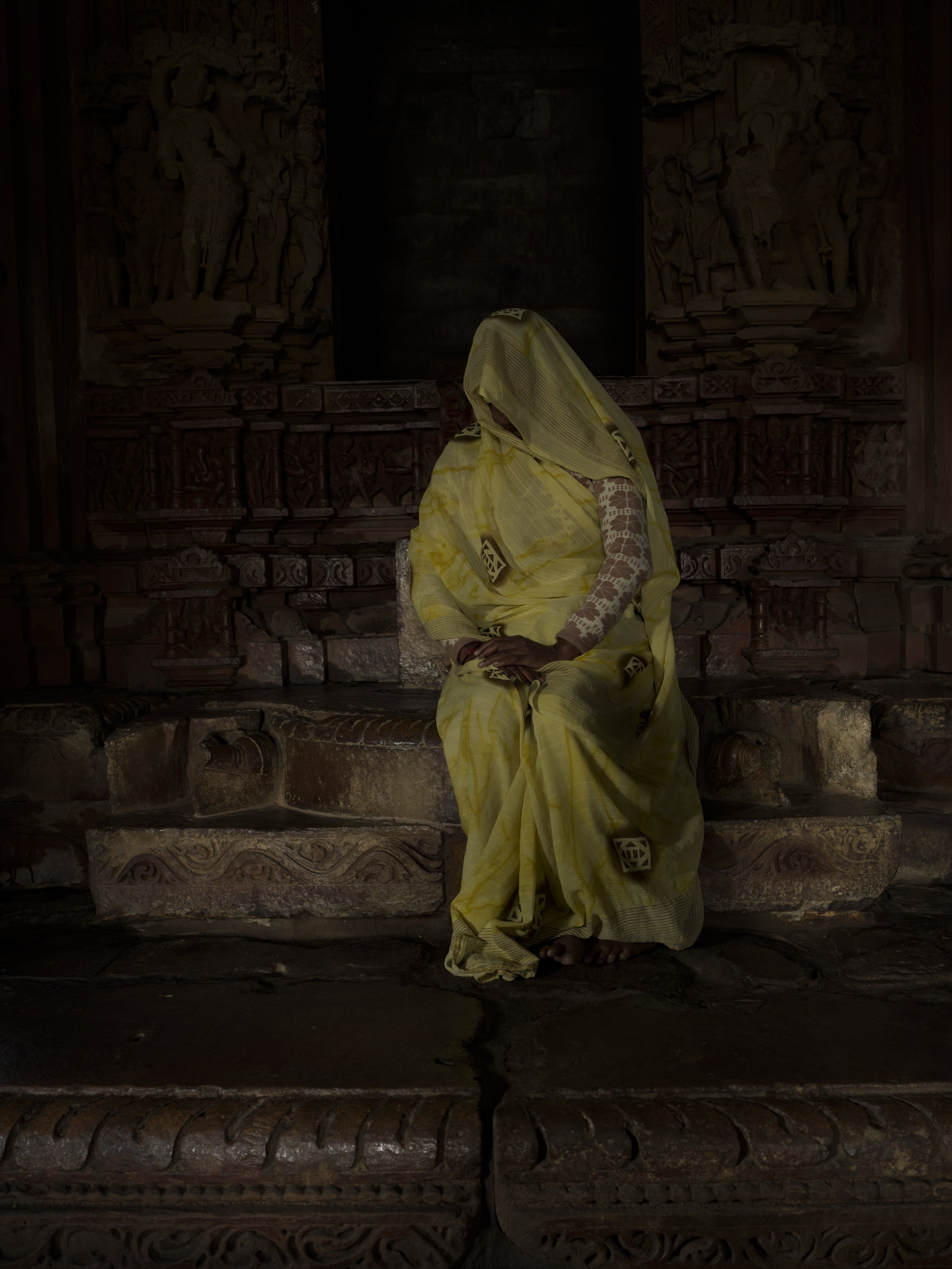
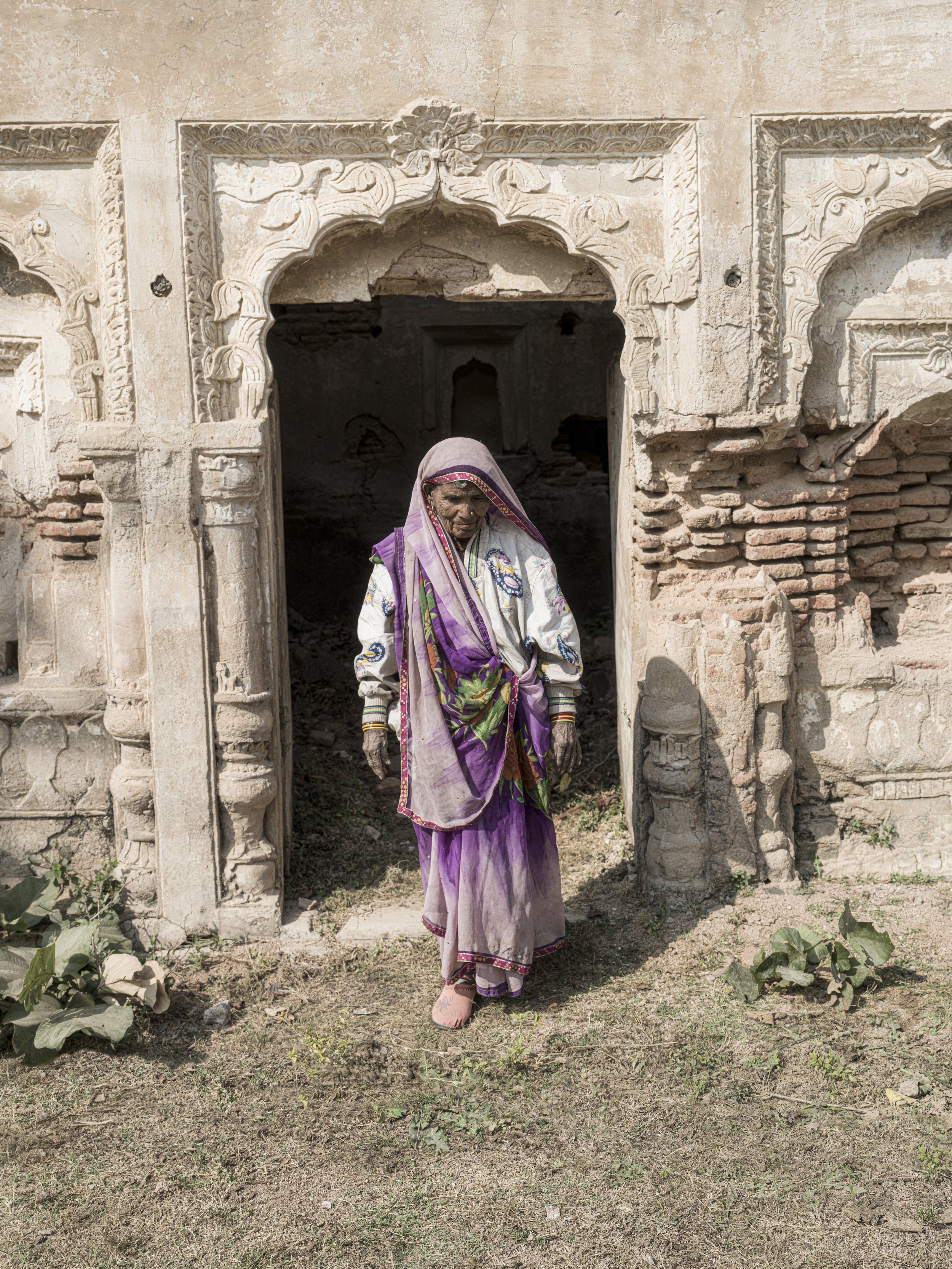
lady emerging from a ruined haveli

on the raod to khajuraho

one of the many daily water runs.....1

on the road from panna to khajuraho.

one of the many daily water runs.....2

on the road from panna to khajuraho.

khajuraho temple
khajuraho temple..2
jain monks of the digambara sect
people line up for the honour of feeding the monks
digambara jains about to select a household to have lunch
the number two jain monk approaches the people who wish to feed him
where will the monks eat?
the jain diet is based on non violence
nirgranth guru
digambara monk with followers
colour not only found in rajasthan
typical scene in rural india
lady emerging from a ruined haveli
one of the many daily water runs.....1
one of the many daily water runs.....2
khajuraho temple

the temples at khajuraho consist of temples for the faiths of hindu and , at a separate site, digambara jains. they are sited in madhya pradesh. and are grouped in 3 geographical diviosions, western , eastern and southern. only 25 out of theoriginal 85 have survived. they are magnificent and certainly worth going out of your way for a visit

khajuraho temple..2

the temples were built between 885 ad and 1000 ad during the chandela dynasty but left to neglect after the kindom was seized by the delhi sultanate. they were rediscovered and brought to a global audience in the 1830s.

jain monks of the digambara sect

they wear no clothes and dont bathe.

they drink water from a gourd and carry peacock feather dusters which they use to clear their path in order to avoid stepping on any insect.

they beg for food and eat only once per day

people line up for the honour of feeding the monks

photographs of the digambara jains taken at the jain temples in khajuraho
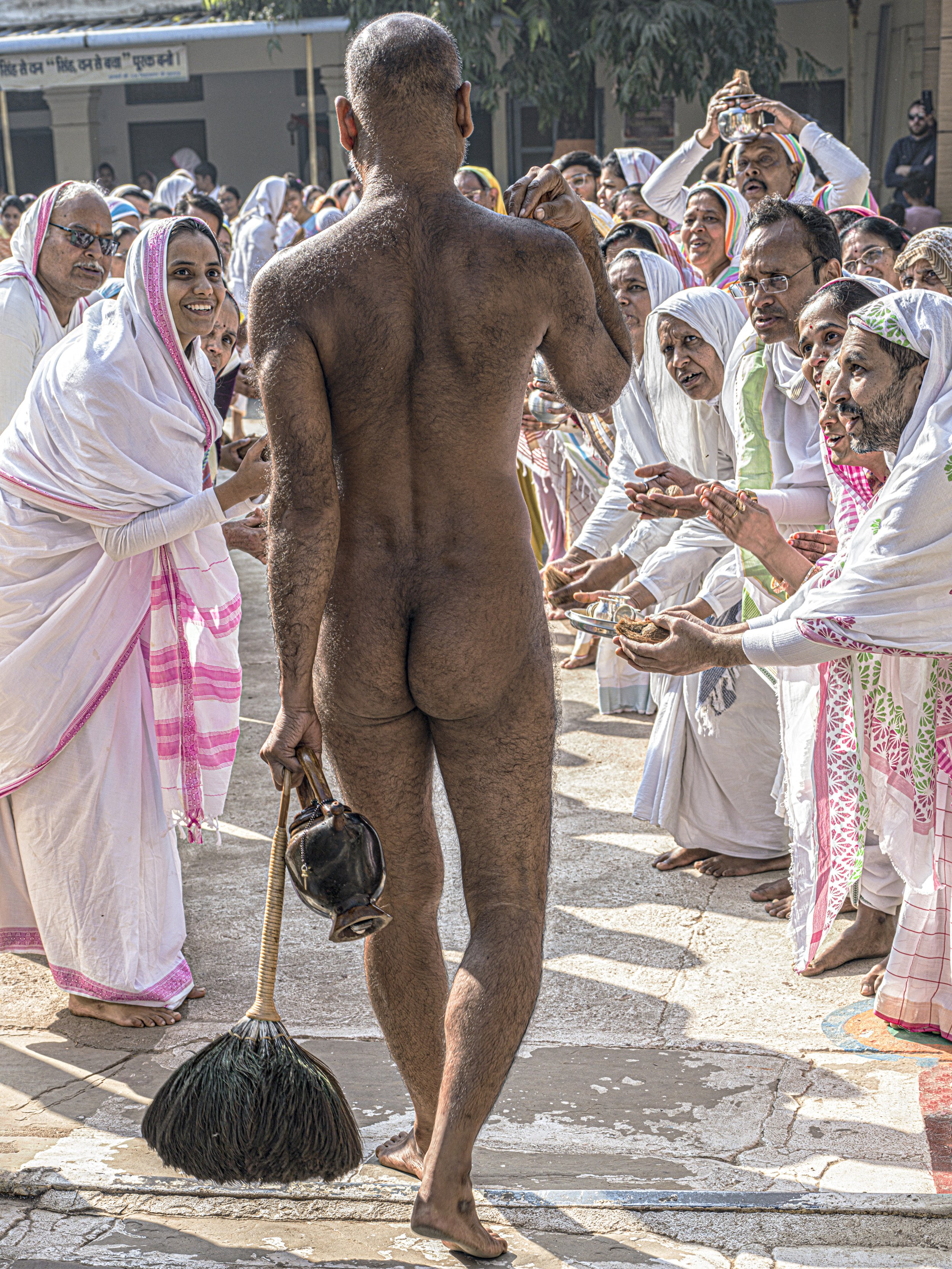
digambara jains about to select a household to have lunch
the number two jain monk approaches the people who wish to feed him

the thumb and four fingers of the right hand rest on the monks shoulder, this is called the ahara mudra. if the monk loses this position on the way to the host house holder he is not supposed to eat that day. in this way the monk does not rest assured about the pleasure of obtaining food.

the monks peacock feather brush and gourd water bottle are clearly visible.
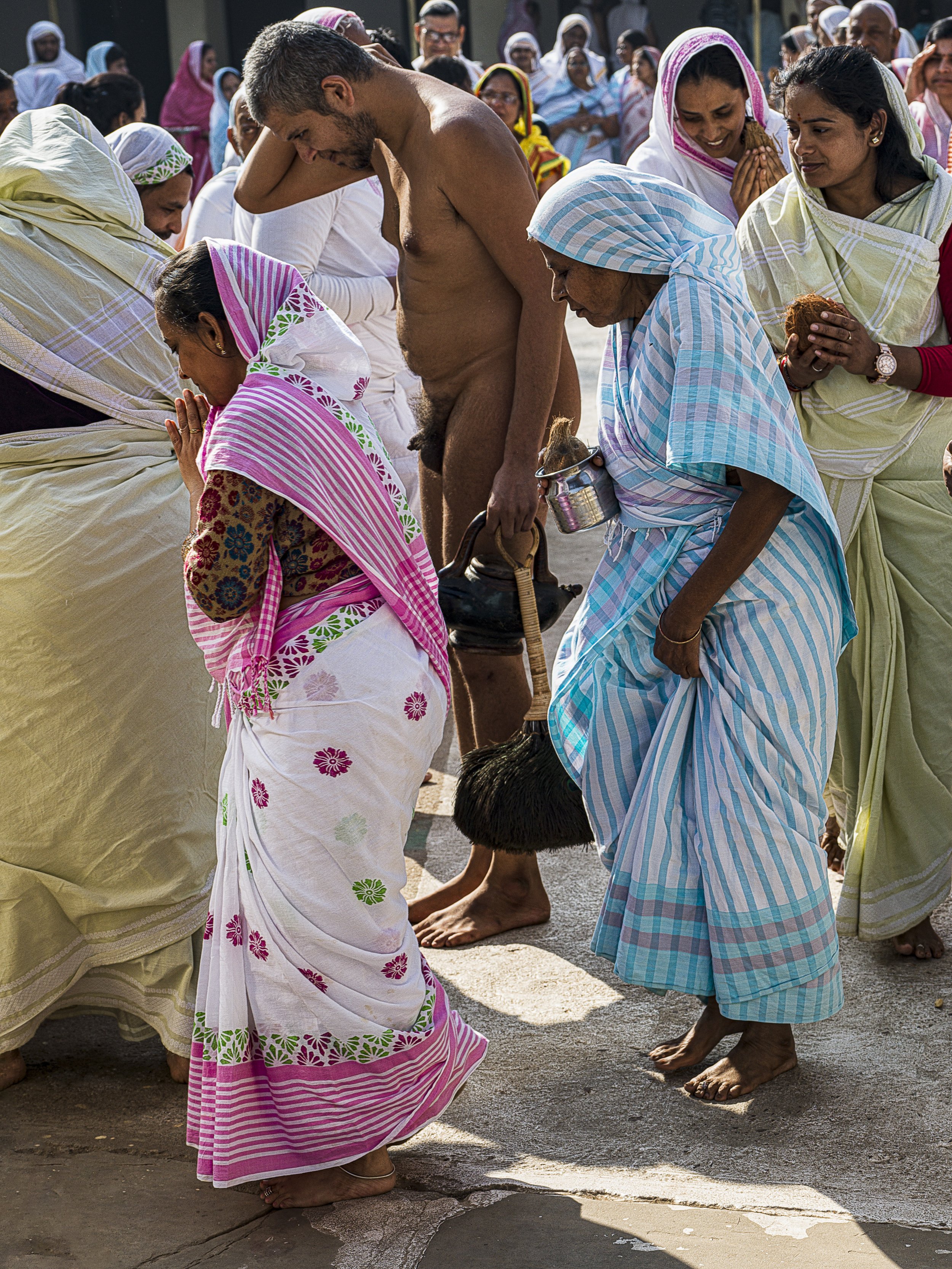
where will the monks eat?

people get very excited in the competition to persuade the monks to eat at their house.
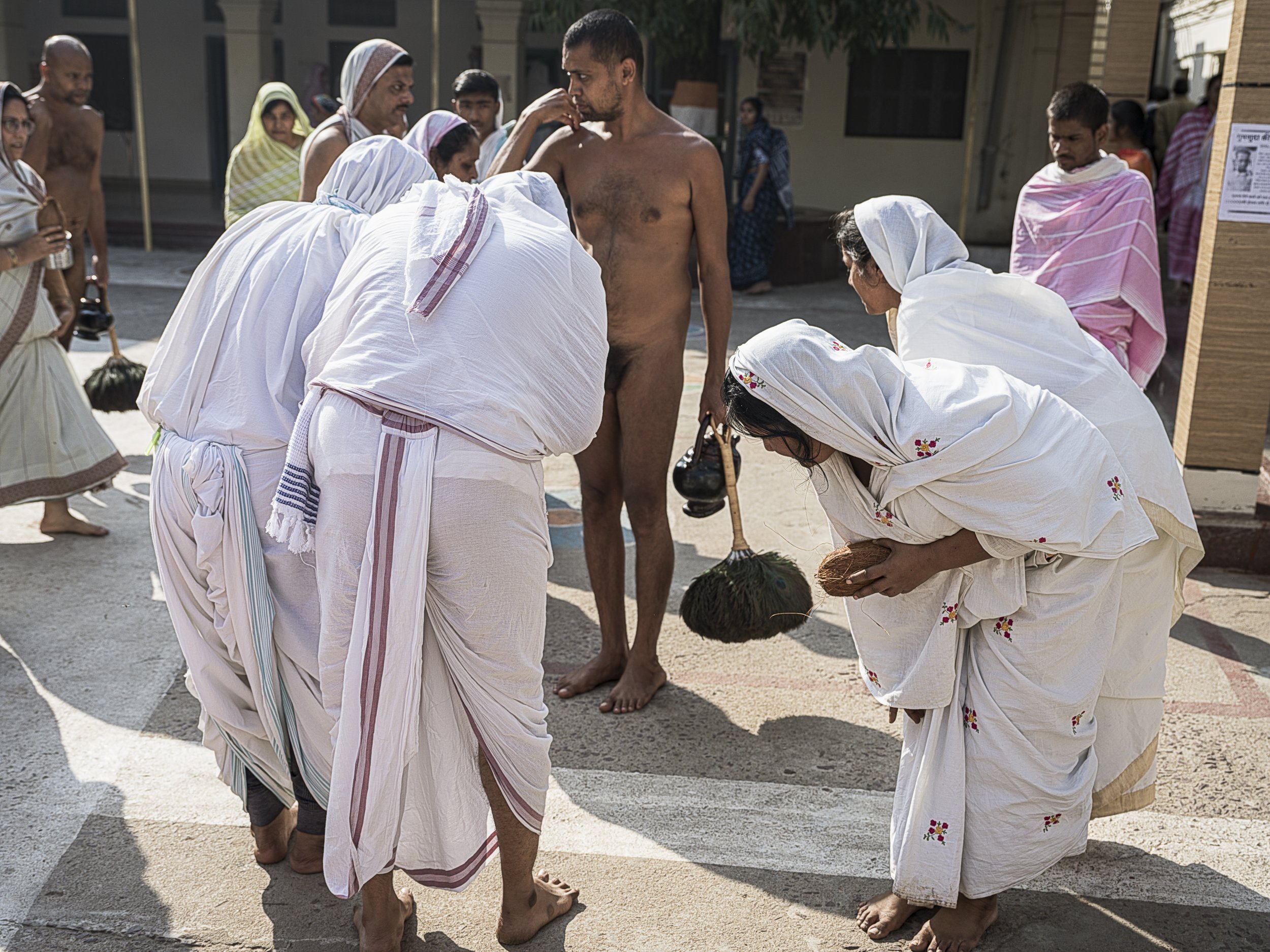
the jain diet is based on non violence

digambara jains eat in a standing position from the hollow of their hands
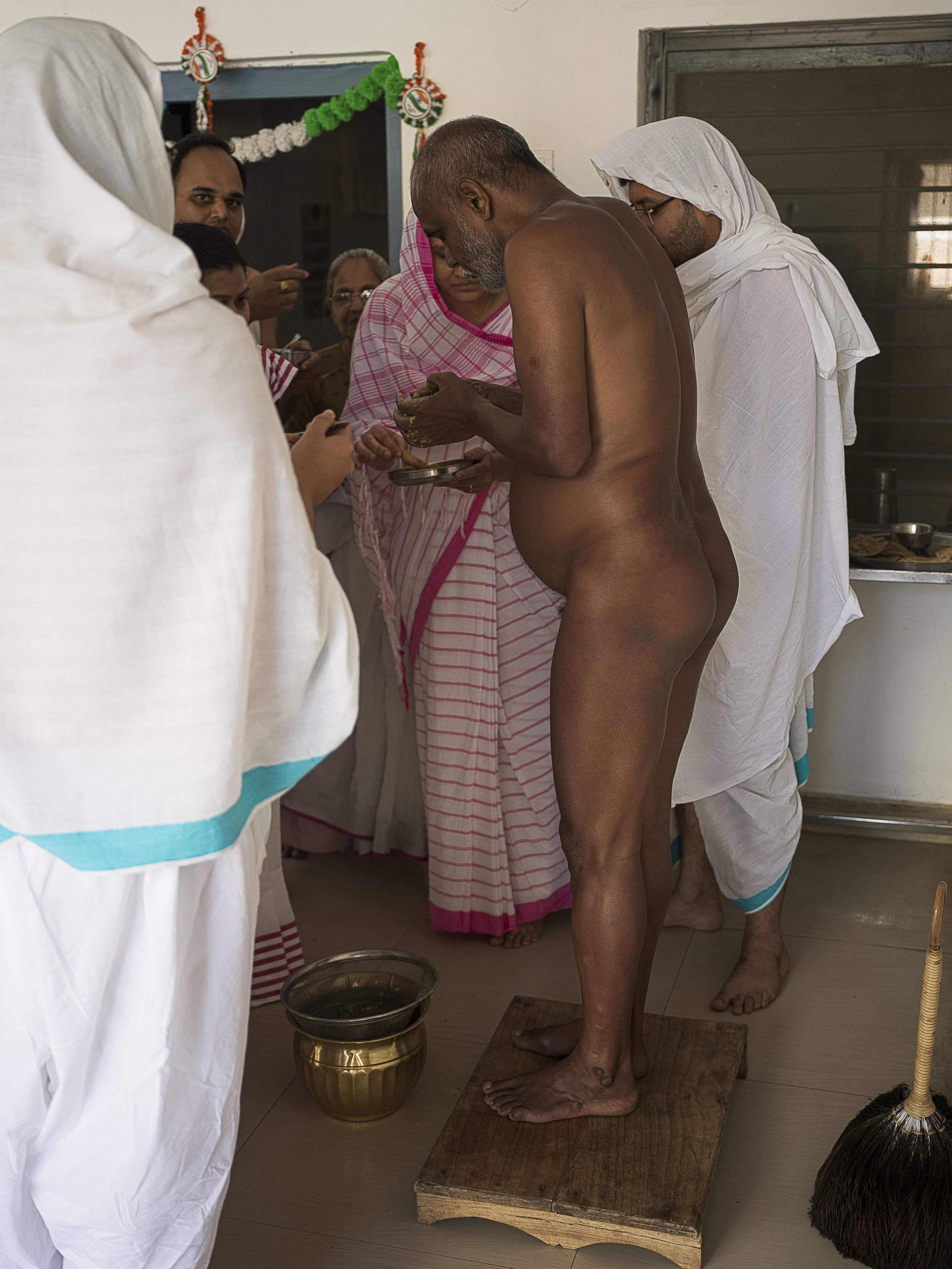
nirgranth guru

he is on instagram.

the monks will stay at a place for a few months. the head jain monk can ask the monks to move to another jain site which he will nominate.
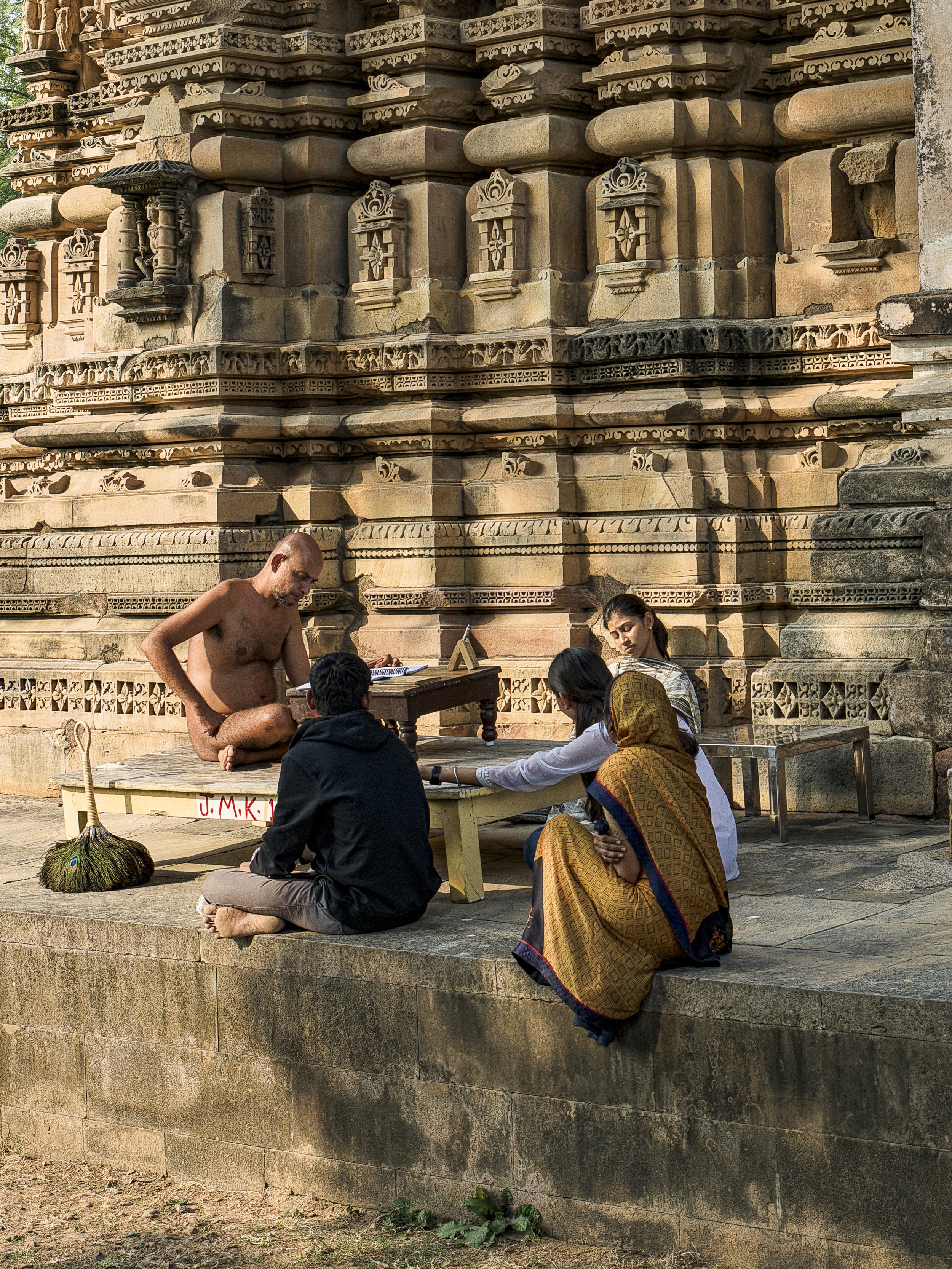
digambara monk with followers

the monks will spend some of the day sitting with followers at sights spread out amongst the jain temples
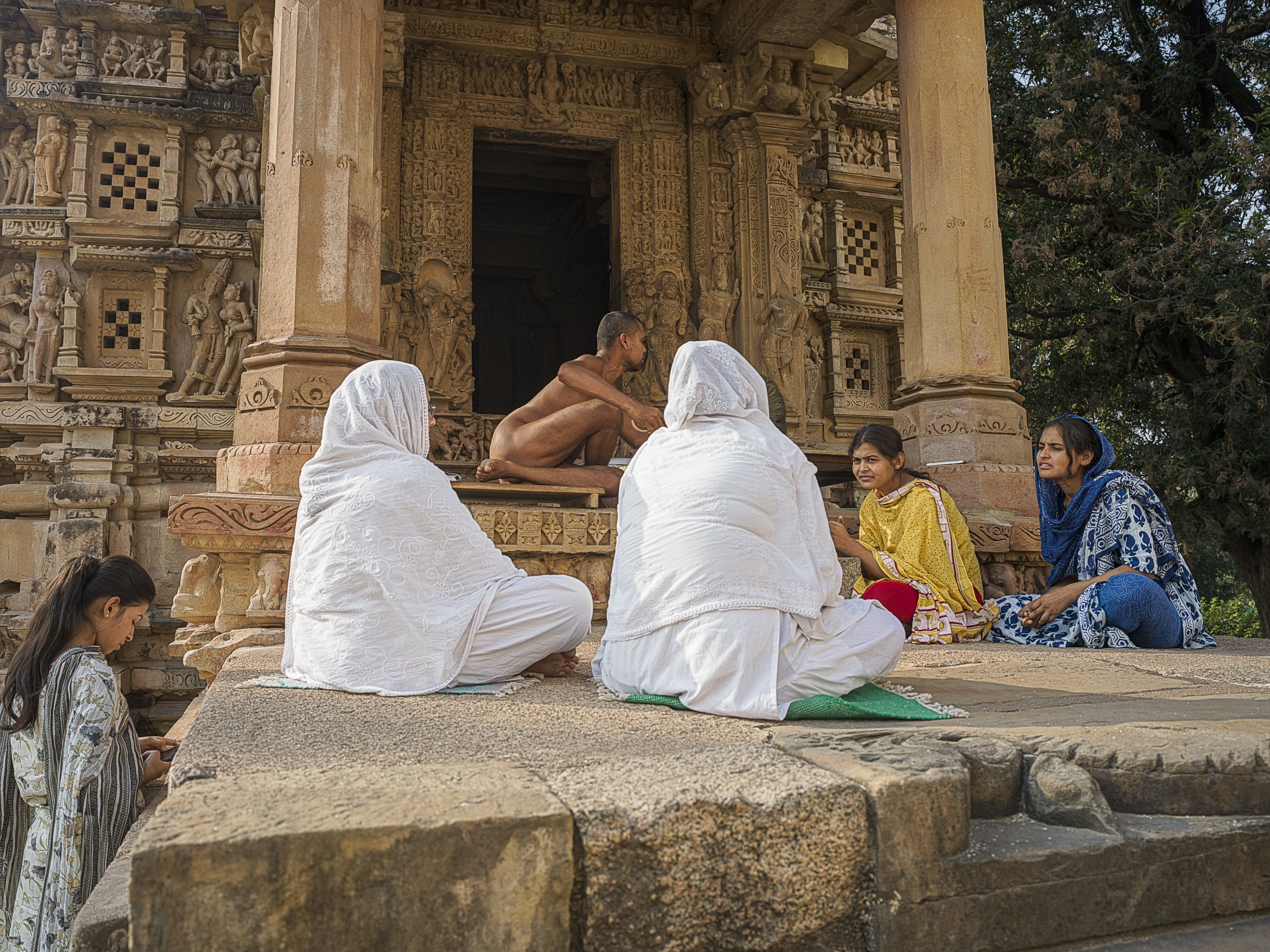
colour not only found in rajasthan

village near the palace of rajgarh , madhya pradesh
typical scene in rural india

…… centred around the village water pump

the village is a few kilometres from the palace of rajgarh
lady emerging from a ruined haveli

on the raod to khajuraho

one of the many daily water runs.....1

on the road from panna to khajuraho.

one of the many daily water runs.....2

on the road from panna to khajuraho.

show thumbnails